Besides Shopify, muun specializes in app development with Flutter. With AI in our development process, a custom app now costs a fraction of what it did a few years ago. So more and more of our clients ask us whether their store should have its own mobile app.
We'd always rather look at your numbers together. Still, a few rules of thumb give you a good first idea of whether an app makes sense for your store.
The problem with paid channels
For many store owners, winning customers through email marketing and similar channels is expensive and often disappointing. Each of these channels runs on someone else's platform, with its own rules, and prices or features can change at any time.
An app avoids that. We build it around your store's needs, and it's self-hosted. It sits on your customers' home screens and reaches them with push notifications: no spam folder, no algorithm deciding who sees what. That matters most for existing customers, for example if you sell consumables, and it keeps you in direct contact with them.
What changes with an app
An app pays off mainly through repeat purchases. You're on your customers' home screen, which makes it much easier to build a lasting relationship:
No cost per message. Push notifications reach your customers directly. Retargeting through ads or email costs money every time and is far less reliable.
More orders from your best customers. Customers who install your app have chosen to. They shop with their saved preferences, which makes buying again easy.
Better timing. With targeted notifications, you reach customers when they're most likely to buy, with the products that fit.
A loyalty program people use. Wishlist, past orders, points: in the app, customers are logged in and use these features. That makes shopping easier for them and shows you what they buy.
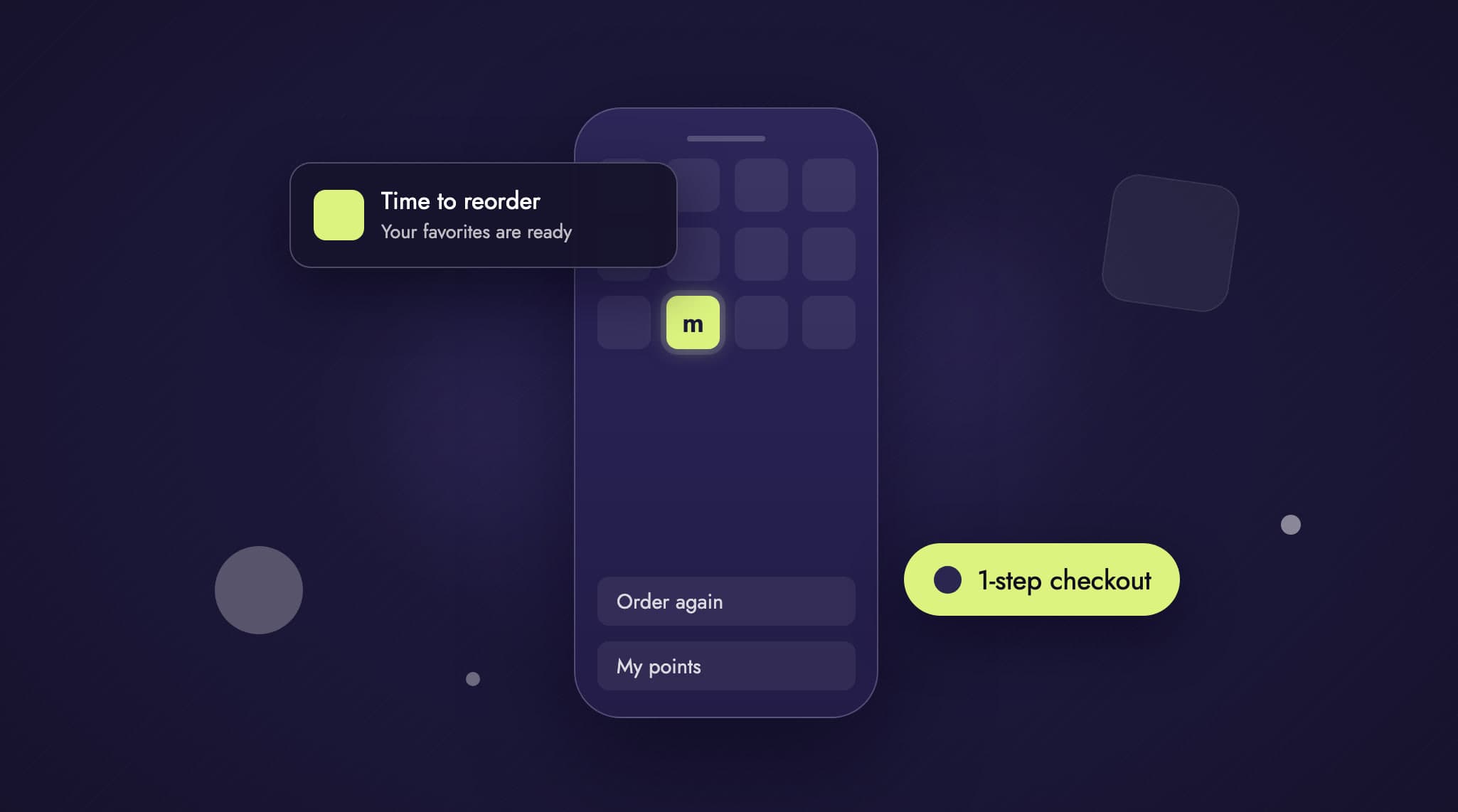
Faster checkout. Order history is one tap away and payment details are saved. A checkout that takes three steps on the mobile web takes one in the app.
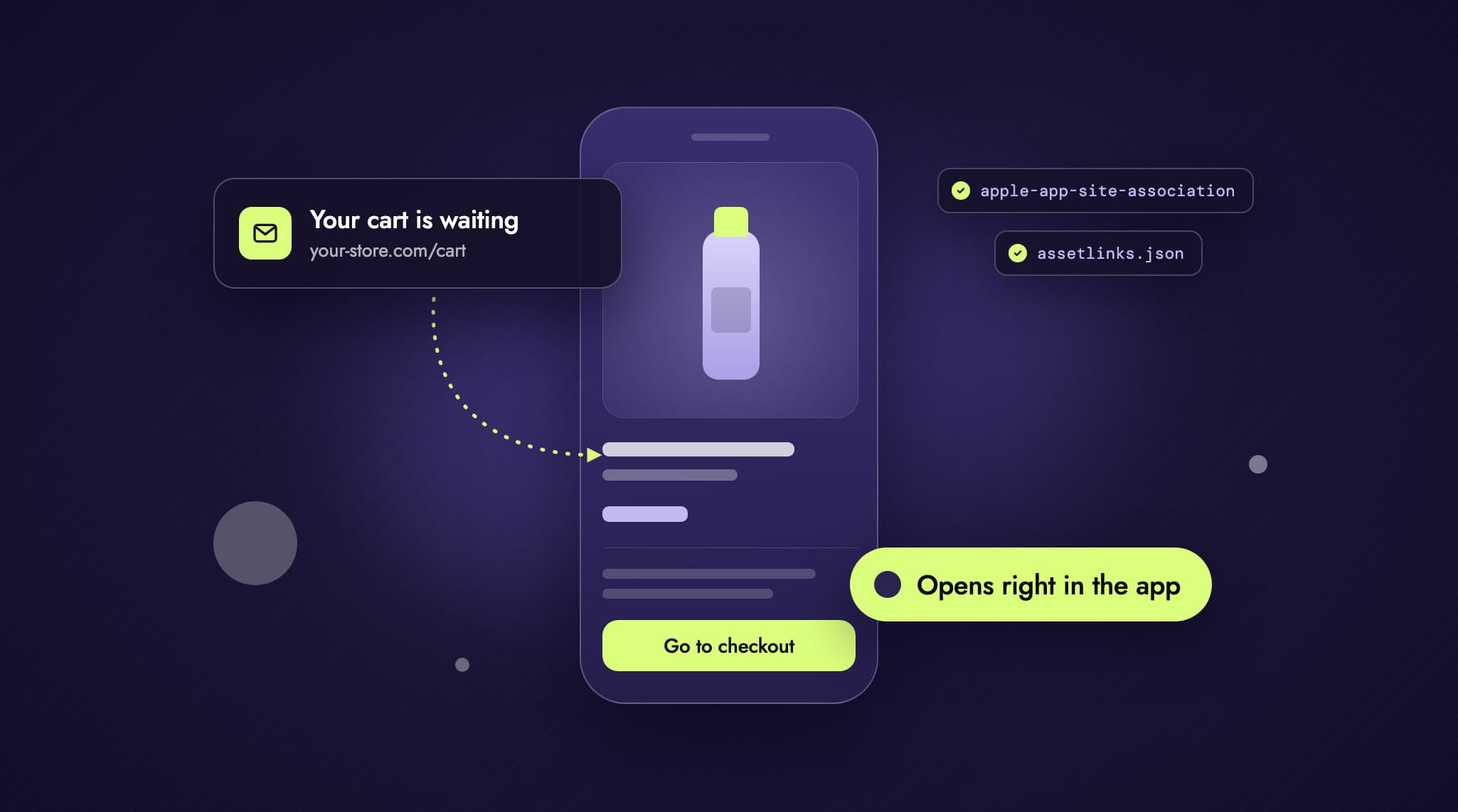
The same goes for links: when customers tap a link in a newsletter or an Instagram story, it should open the app, not the mobile browser. We explain how to set that up with Shopify in Deep links with Shopify.
Which stores benefit most
All of this works best for stores with repeat purchases and loyal customers. These five types of store get the most out of an app:
Consumables that get reordered. Beauty, food, pet supplies or supplements: satisfied customers reorder them regularly. In the app, their preferences are saved, and you know when it's time for a reminder.
Brands with drops and launches. A push notification puts new releases on the home screen, so nobody misses a limited edition. That alone is a good reason for customers to install the app.
Stores with a loyalty program. In the app, customers are always logged in. Checking their points or current offers gives them a reason to open the app and browse.
Online and in-store. If you also run physical shops, an app can bring both together: pickup notifications, local offers, stock availability or appointment booking. You know what your store needs, and we build the features for it.
B2B with regular orders. Order history, customer-specific prices, barcodes: B2B customers have everything they need in one place.
Costs and break-even
So does it pay off? Usually sooner than our clients expect.
A custom app isn't a one-off project. We keep analyzing what brings your customers back and which features improve their shopping experience. For development, maintenance and ongoing work, plan for a five-figure amount per year. Additional orders have to cover that: your return is the number of extra orders times your average contribution margin per order. So whether an app pays for itself depends a lot on your margin. In our experience, an app breaks even at around 3,000 active customers, and from about 5,000 to 6,000 active customers you can run it so that it keeps growing.
One example from our work: a custom app we built with Flutter for a large beauty client, including a product try-on with augmented reality, and still support today. After the first year, about 30% of revenue came through the app. That shows how well customers took to it. What counts in the end, of course, is the additional contribution margin, and part of those 30% is business that moved from the website to the app. Every case is different, so we're happy to run the numbers for yours.
Checklist: is an app right for your store?
If most of these seven points apply to you, an app is very likely a good investment for your store.
If that sounds like your store, an app could be the right next step for growth and for keeping your regular customers close. It can do more than most other marketing channels. In a call, we can work out where the biggest levers are and what investment makes sense.
When we advise against an app
Sometimes an app isn't the right move, and then we'll tell you. That's why we always look at your specific case. The last two points on the checklist matter a lot here.
If your online store still has a lot of untapped potential, it usually makes sense to improve it first and add the app as a second channel later. An app is also a poor fit for products people buy only once, where no loyal customer base forms. The same goes for smaller stores that are still building their customer base and don't yet have enough regular customers to use an app. In these cases, we'll suggest other channels and strategies that pay off better.
We don't sell an off-the-shelf product. We build what fits your store, based on your data. We run the numbers with you, and you get a figure, not just a recommendation. Development costs are lower than they've been in years, but an app is only worth it if it fits your store and brings in more revenue and loyal customers over time.
Where does your store stand? Book a call with our CEO Eric and we'll do the math together.